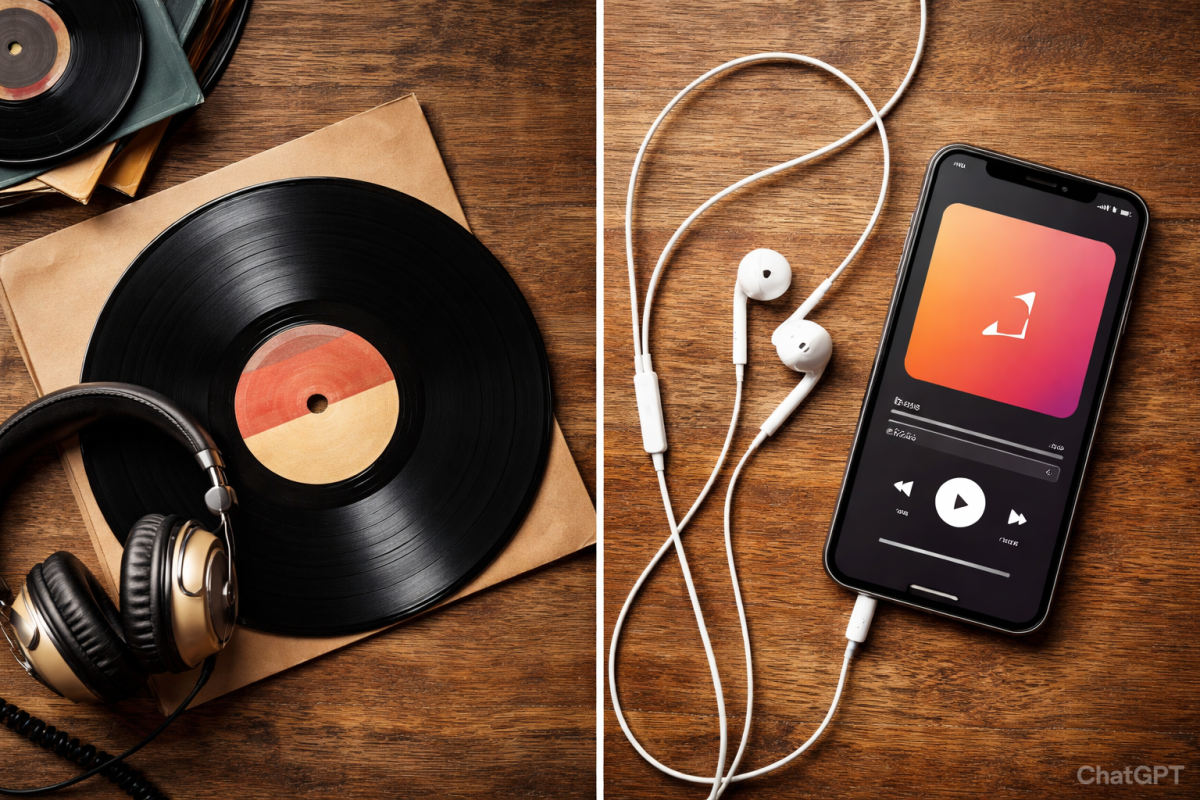
Social media has changed how music becomes popular today. In the past, songs usually gained popularity through the radio or television programs like MTV. Now, platforms like TikTok allow songs to spread quickly through short videos, trends, and viral challenges. Just one short TikTok video can turn an unknown song into a hit overnight. Because of this, social media plays a major role in deciding what music people listen to.
“I think social media has not changed what becomes popular. Social media pushes out even more what’s already popular, especially popular artists. When an artist makes a new song, it gets pushed out more by social media, but a new artist will usually not get the same treatment,” shared FCHS junior Jorge Moreno.
While some may disagree on how social media promotes already popular artists, others argue that the real issue lies in how different generations view music or what they value in it. These differences are especially noticeable between age groups, which often raises the question: Why do older generations often criticize today’s music? Some feel that older generations tend to judge today’s music simply because it is so very different from what they grew up listening to.
“Music has simply changed in the beats and lyrics. The beats in songs can be very different, as one second it can be a calm beat, and the next it can become more fast paced. The lyrics have also changed, obviously. It depends on the artist, but the most popular ones don’t sing and say the things that people used to say in older songs,” said junior Braddock McCauley.
Nostalgia also plays a big role. Older generations often connect older music with a sense of meaning, emotion, or even with important memories. As a result, criticism may be less about the quality of today’s music and more about personal experience and generational differences.
Today’s artists face new challenges that go beyond generational opinions. One of the biggest questions shaping modern music is whether artificial intelligence (AI) is a threat or a tool for creators.
“I think it could be a threat. Artists could use it to make beats or create lyrics, and that would not allow up-and-coming producers to have as many opportunities as they would if AI didn’t make them. Producers would have to work harder to barely get featured on one song because AI would be cheaper and more efficient,” said Moreno.
Depending on how it is used, AI can help artists create beats, write lyrics, and experiment with new sounds more quickly. However, some artists worry that AI could replace human creativity or be used to copy styles without permission.
Beyond how music is created, it is important to consider how music affects culture. Does music today have the same cultural impact as music from the past?
Some feel that today’s music affects society differently from previous decades. In earlier years, music often united large groups of people around shared interests or social movements. Now, audiences divided into smaller communities and trends. While modern music may not always create the same widespread cultural moments, it continues to influence identity and self-expression, showing that its impact has changed rather than disappeared.
“I don’t think music has the same impact as it used to. Now, music is made to express feelings about someone else or about things people have or want. Music isn’t too often made to have a big impact, but when it is, it does,” said sophomore Caden Marshall.