-
Graphic made in Canva by Fluco Journalism.

-
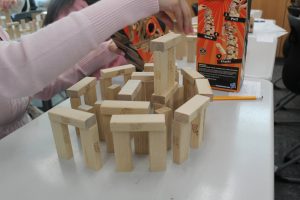
History teacher Stephanie Kelley recently had students recreate Stonehenge with Jenga blocks. “It was a participation grade, and my goal was for them to learn and remember Stonehenge as a result of having a hands-on activity about it,” said Kelley.

-
Students were able to quickly build recreations of the monument themselves. Stonehenge is a prehistoric monument that was built in stages over 1,500 years, beginning around 3000 B.C. It features massive sarsen stones and smaller bluestones transported from up to 150 miles away.

-
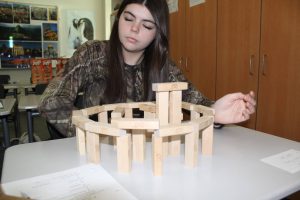
The hands-on activity was able to capture and interest Kelley’s class. “I feel that it was successful because students were engaged and seemed to know details about Stonehenge,” shared Kelley. “This only took 5–15 minutes for students. Some ran out of blocks, and that was a challenge, but there were extras for them to use,” she added. Here, sophomore Lilly Davis finishes her construction.

-
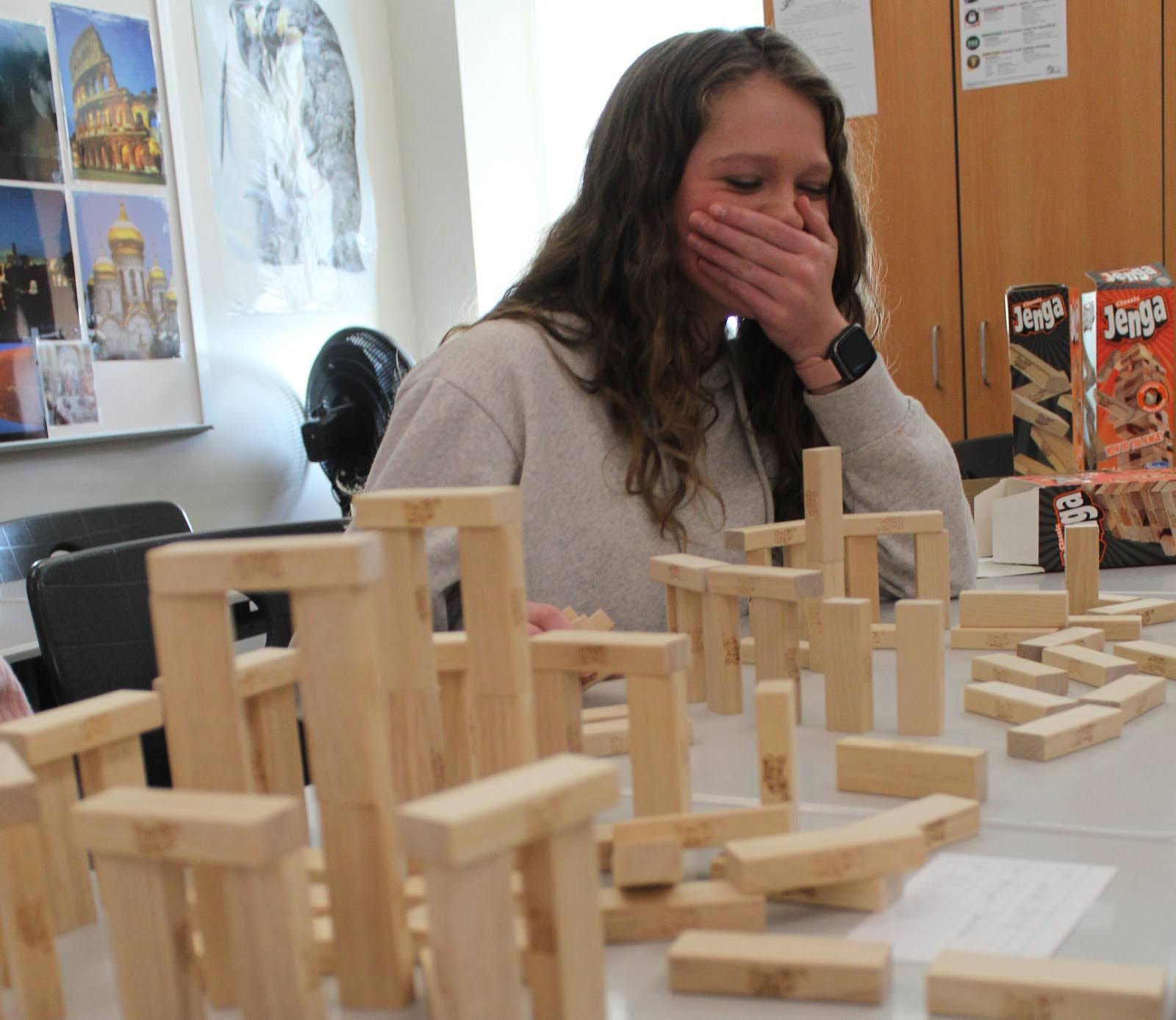
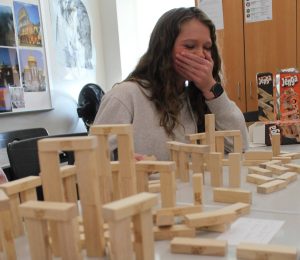
Pictured, freshman Izabella Campbell laughs after her mini-Stonehenge creation falls. “Students were able to learn about and research Stonehenge before the building process began. I showed them some pictures of Stonehenge, and we watched videos and took notes about the topic before this activity,” said Kelley. Construction of Stonehenge began about 5,000 years ago in the late Neolithic period, making it older than the Egyptian pyramids.
-
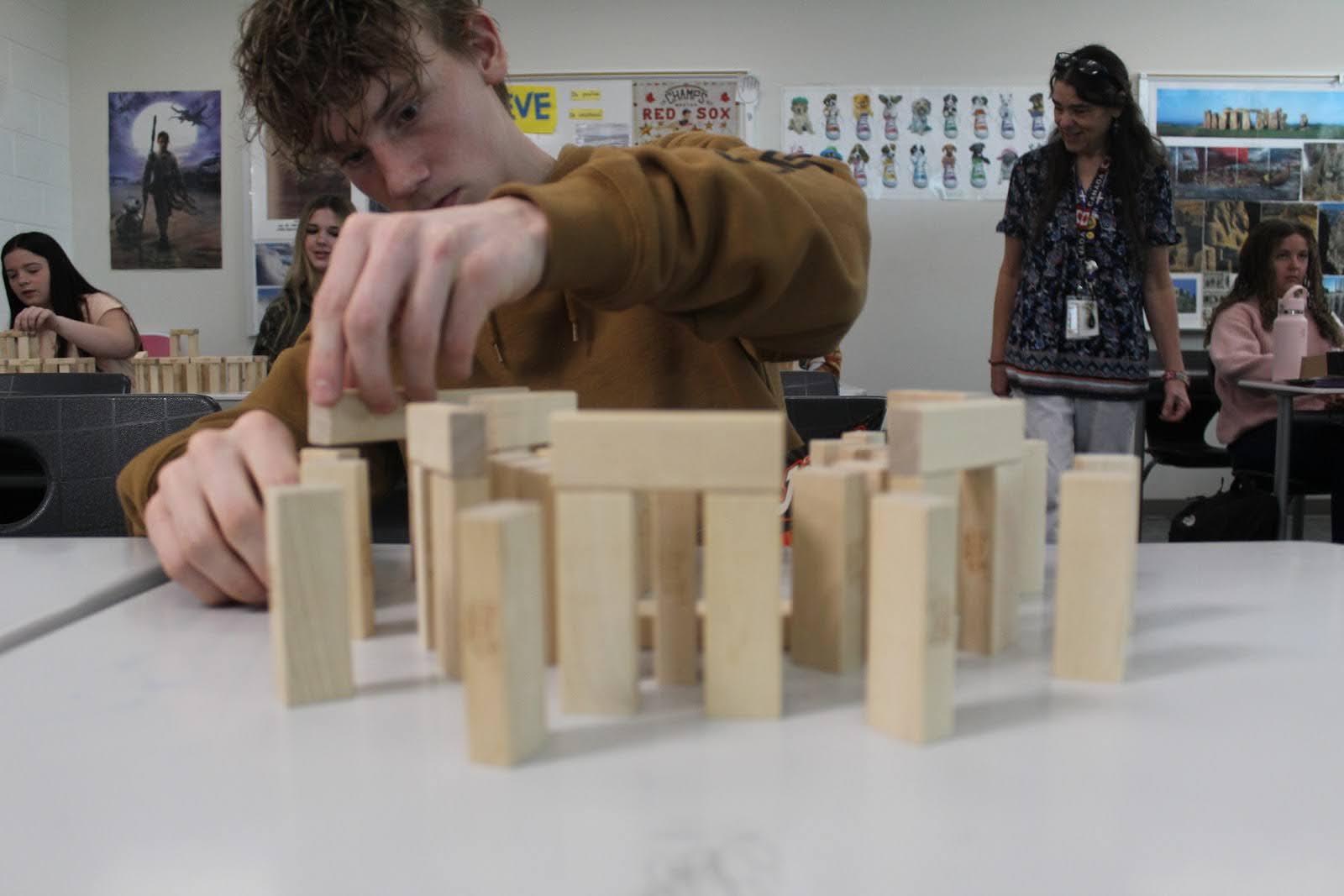
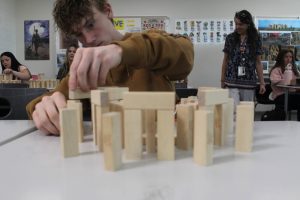
Freshman Bryce Hoy constructs his version of Stonehenge. The ancient monument can exhibit the changes in technology over the centuries. “Stonehenge is very important, as it shows the evolution of how we build and structure buildings,” said Kelley.
Hour in… Stonehenge with Kelley
February 16, 2026
More to Discover