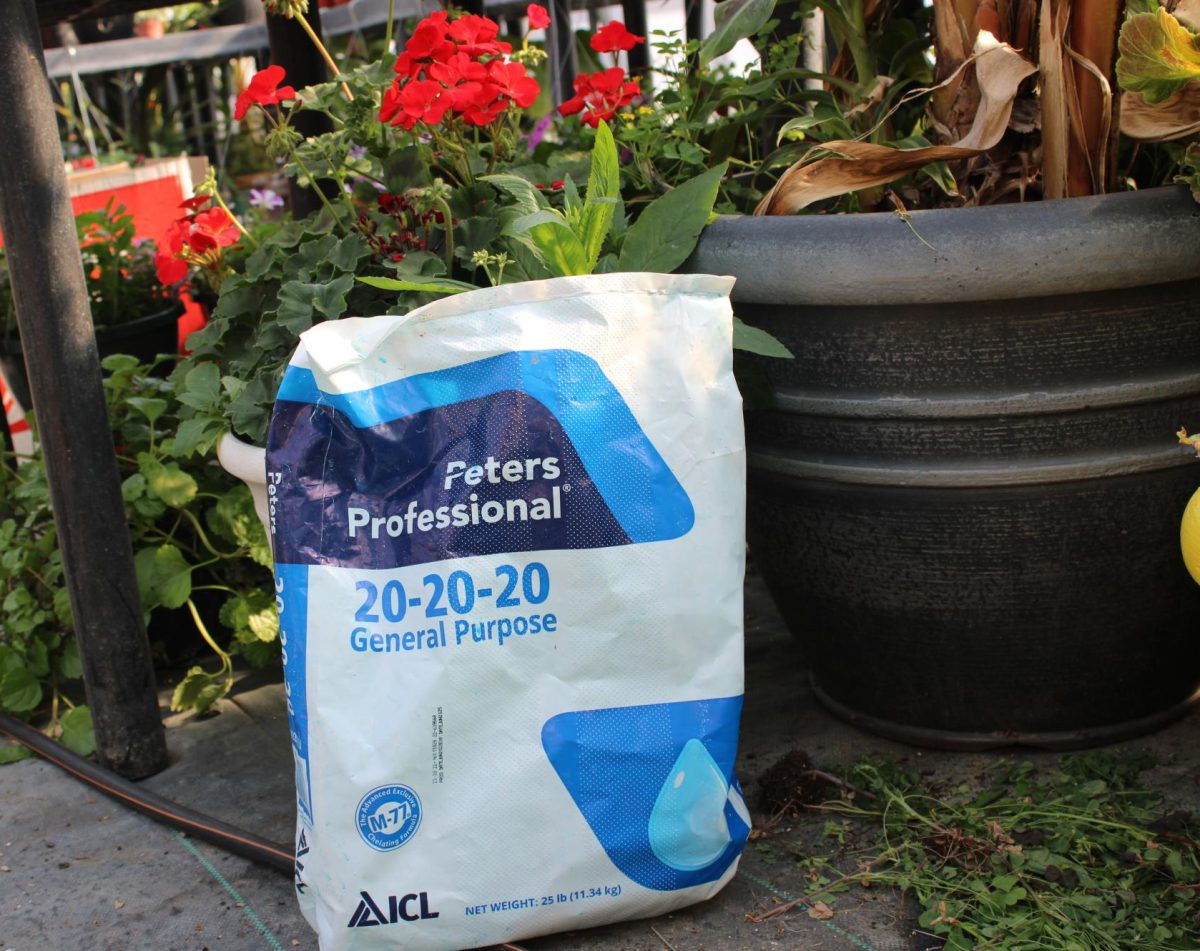
With the rising concerns of gas and oil prices due to the conflict in Iran, there is another issue affecting Americans more than many realize: the rising price of fertilizer.
Since the start of the conflict, one of the most important trade routes in the world, the Strait of Hormuz, has been effectively closed by the Iranian government, limiting or delaying the amount of goods–from gas to semiconductors, and from aluminum to batteries–from being transported around the world. While the general public has focused on the conflict’s effect on oil prices, the produce people eat, and the fertilizer it takes to grow that produce, has also been affected by these disruptions.
Now, at the start of the corn, soybean, and spring planting season, essential fertilizers and nutrients such as nitrogen and phosphorus have sharply risen. One of the most common fertilizers, a nitrogen-based fertilizer called urea, has risen by roughly 30%. Around 50% of the world’s supply of urea passes through the Strait of Hormuz, so backups and shutdowns in the strait have caused fertilizer prices for farmers to soar, according to a recent report by NPR.
FCHS Agriculture teacher Russell Jennings said that while fertilizer prices were already high, they have continued to rise since the conflict began. He explained that much of the nitrogen and phosphorus fertilizer comes through Russia, and that since the start of the war in Ukraine, U.S. sanctions on Russia have contributed to higher fertilizer prices. Because this already-limited fertilizer supply also moves through the Strait of Hormuz, the result has been even higher costs.
“That’s why the price of my nitrogen-phosphorus fertilizer has doubled this year,” Jennings said, adding, “I’ve had to reorganize my greenhouse to save money.”
Nitrogen is not the only plant nutrient facing supply issues. Sulfur is another essential element needed for plants to grow healthy and quickly, especially when farmers–including those in Fluvanna–are trying to produce crops for millions of Americans. Sulfur promotes root development, stem strength, and overall crop quality. However, sulfur is also becoming more expensive, with much of the imported supply coming through the Strait of Hormuz.
According to Jack Dura of the Associated Press, the shortage of these vital materials, along with other disruptions caused by the conflict in Iran, has created panic among farmers, with some unable to afford fertilizer for the year. This shortage has also caused fertilizer supplies in the United States to be quickly bought up, leaving warehouses empty and many farmers with nowhere to turn.
“This is why this situation is so serious,” South Carolina Farm Bureau Head Harry Ott told Dura. “It is a really dire situation that farmers are facing.”
With resources becoming scarce, the federal government is scrambling for a response. Many other countries are facing similar problems due to the disruptions, so they are unable to meet America’s import demands for fertilizer. Countries such as China and India are also prioritizing their own domestic needs, while their trade operations are being damaged, according to the UN’s Trade and Development Department.
“We’re really in a dilemma here, because it’s very difficult to store fertilizer supplies in the first place, so they aren’t going to produce any here in America,” Jennings said. “It’s way too expensive and dangerous. We don’t have the supplies or the storage to house the product.”
For the time being, the Trump administration has increased its purchase of fertilizer from Venezuela. The U.S. recently established a complicated relationship with the Venezuelan government after a military campaign in which Venezuela’s former, President Nicholas Maduro, was captured and brought to the U.S. for trial on narco-terrorism and drug trafficking charges.
The U.S. government has also provided farmers with a one-time $12 billion package after the Trump administration’s plethora of tariffs at the start of his term, although that will not nearly be enough to cover the costs of the Iranian conflict. According to AP News, farmers are expected to receive an average of $44 per acre, while the USDA suggests that farmers need around $900 per acre for production. This creates a major deficit and significant profit losses, even with government assistance.
Ultimately, things may remain tough for farmers for some time. As Brandon Gomez noted in a recent CNBC article, “Now bracing for a less profitable growing season, many farmers are reworking their books to try to blunt the blow from rising commodity costs.”