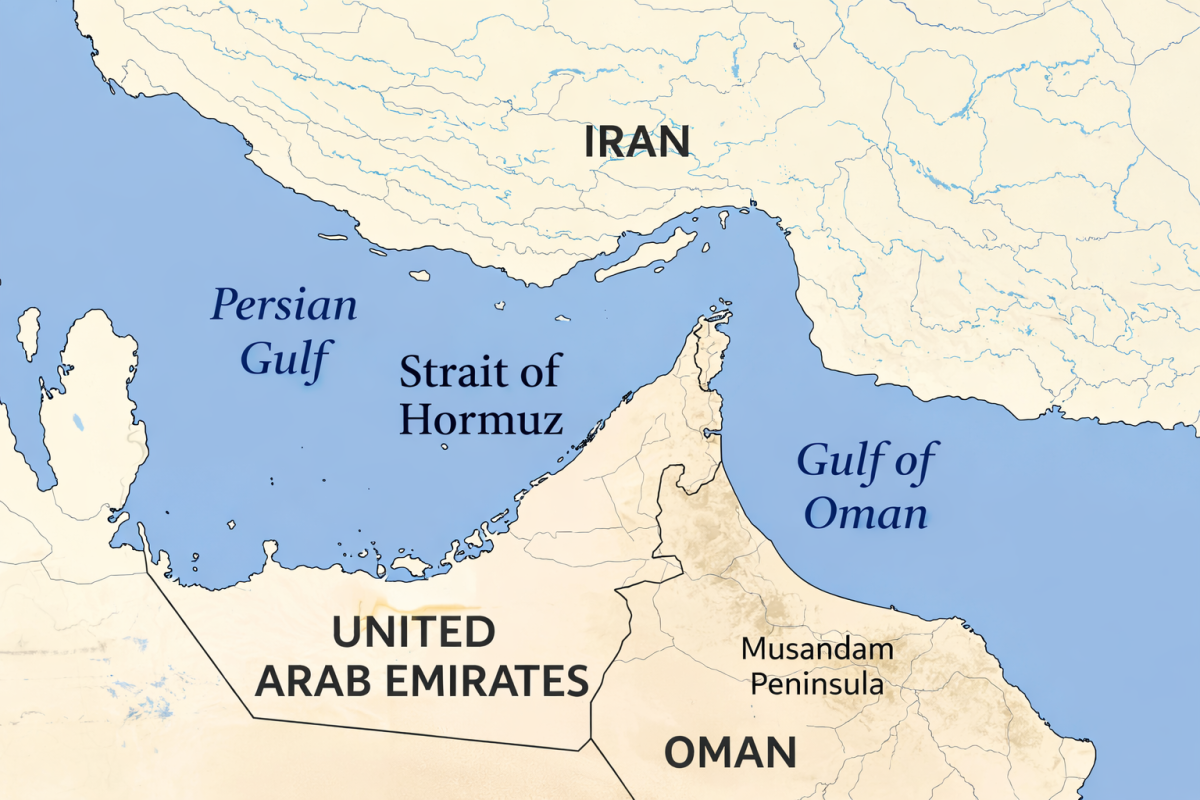
You may have heard the term “Strait of Hormuz,” but have no idea where it is or what it is. However, the strait is a 104-mile-long, 21-mile-wide passage with Iran to the north and the United Arab Emirates (UAE) and Oman to the south. It is the only sea passage connecting the Persian Gulf to the ocean, making it a critical spot for oil and gas leaving the Middle East.
Here’s why that sea passage matters to you. According to the International Energy Agency, 34% of the world’s daily oil usage passes through the Strait of Hormuz, but due to recent conflicts in the area, the strait has been closed. This is not only a problem for the oil and gas market, but it also affects the entire global economy. Beyond the early consequences that you may have already seen, like rising gas prices and higher travel prices, there are also long-term effects.
If the Strait of Hormuz is closed over an extended period of time, the results on the U.S. economy could be profound. With less oil and gas getting where it needs to be, but with demand remaining high, oil and gas could skyrocket, affecting almost every industry in the world. Higher transportation costs for shipping companies will increase the prices of everyday products on shelves, from gas to clothes, and from food to medications, putting strain on consumers. Agricultural companies rely heavily on cheap fuel for machinery used to grow food. With higher costs to run machines, companies would have no choice but to raise prices on their products.
Even now, with the ongoing conflict and risk of ships in the Strait of Hormuz being struck by an Iranian bomb or drone, most companies that rely on the passage for regular trade are nervous and choosing longer shipping routes for their goods. This instability not only affects the companies that transport goods through the strait but also the insurance companies that provide coverage for the ships, and these costs are passed on to consumers.
Another long-term effect of an absolute closure of the Strait of Hormuz could be increased tensions between countries. Because so many countries rely on the exports that travel through the strait, a longer shutdown could make the current conflict worse and may even lead to the American military having to put boots on the ground, which would increase the risk of American casualties.
Some argue that, as of now, the Strait of Hormuz may not officially be closed, but is effectively closed to most Western and commercial shipping due to the ongoing Iran-U.S./Israel war. Currently, there is no end in sight to the effective closure. According to ABC News, on March 25, “Iranian Foreign Minister Abbas Araghchi said on state TV that ‘Iran’s power is the Hormuz Strait.’” He continued, “I also want to say here that, from our point of view, the Hormuz Strait is not completely closed; it is closed only to our natural enemies.”
.