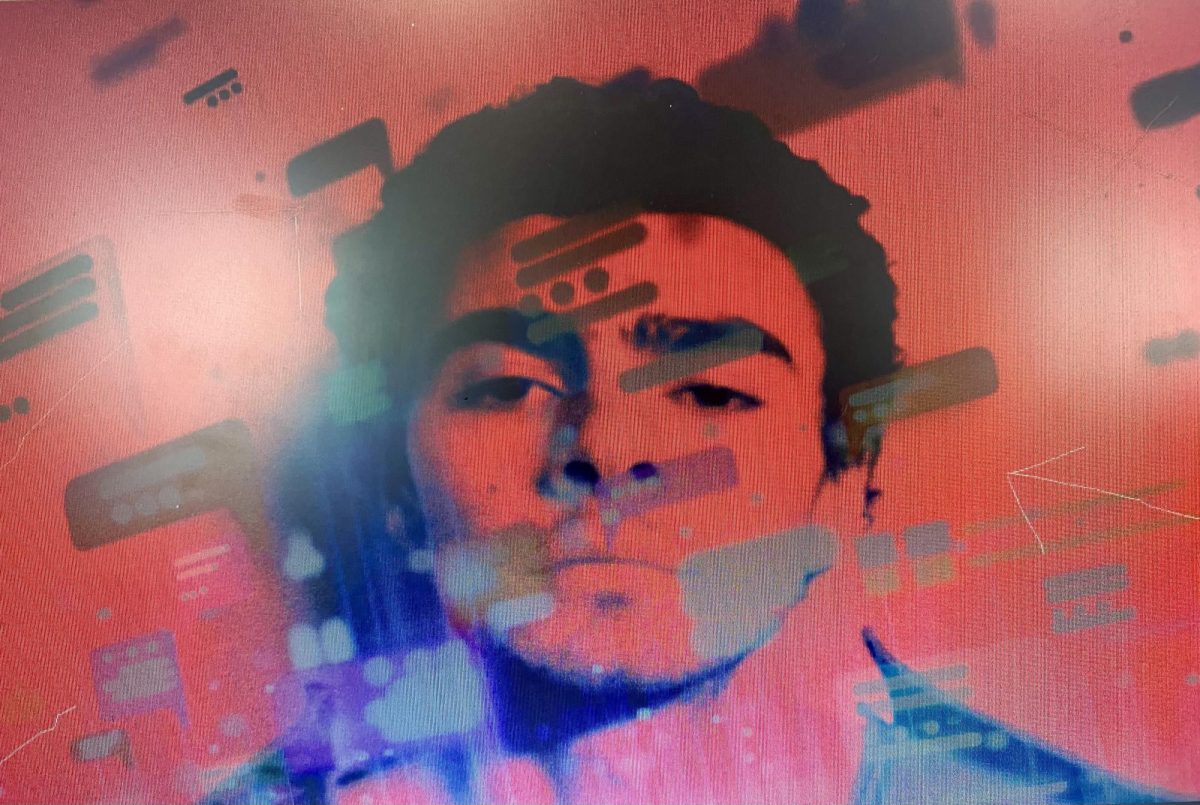
The fatal shooting of a health care CEO last December may have revealed something more unsettling than violence itself–that many young Americans completely understand the rage, even if they don’t condone the action of murder.
United Healthcare CEO Brian Thompson was shot and killed on Dec. 4, 2024, as he arrived at a Manhattan hotel for his company’s annual investor conference. Surveillance video showed him being shot from behind by a masked gunman, who was allegedly traced back to 27-year-old Luigi Mangione, who was charged with his murder.
According to NBC News, Mangione was charged with two federal counts of stalking, one count of murder through the use of a firearm, and one count of a firearms offense. Mangione will appear in court on Dec. 1 for an evidence hearing.
Mangione earned his bachelor’s degree in computer science at the University of Pennsylvania. He moved to Waikiki, Hawaii, in April of 2022 and worked from home while, according to friends, continuously partying. According to Psychology Today, Mangione had had back pain since he was a child, caused by a condition called spondylolisthesis.
While he was in Hawaii, he learned to surf. When he was surfing, he suffered an injury leading to severe back pain, which worsened and led to an ongoing battle with his health insurance provider as he tried to get them to cover the costs of his treatment. Eventually, he had a spinal fusion, which reportedly did not end the pain. Reports say Mangione continued to fight with his health insurance provider, a fact which some believe led to his alleged murder of Thompson, an innocent father of two children, on the streets of Manhattan.
Mangione’s lawyers are seeking a dismissal of a federal charge for the alleged assassination because they allege that comments by U.S. Attorney General Pam Bondi and President Donald Trump have been prejudicial. The count they are trying to dismiss is the only one that could lead to Mangione receiving the death penalty if convicted. Mangione is pleading not guilty on all charges, and his next hearing is Dec. 5.
“What [Mangione] did was uncalled for, but the fame is surprising, because I didn’t think that someone who had such a big impact on the healthcare field would get murdered like that,” said FCHS freshman Sean Sloan.
Others, however, feel that Mangione’s fame is not surprising, especially among young people.
According to Axios, a new poll of college students found that half view the killing extremely or somewhat favorably, and nearly half believe the crime was justified, with over 80% of students saying they have a negative view of Thompson. Many young Americans are now supporting Mangione, at least in his fight against big insurance companies, placing politics at the center of their identity.
“There is a sense amongst a lot of young people that the system is not working and that somebody needs to do something—and maybe it’s them,” said John H. Richardson, author of “Luigi: The Making and The Meaning.”
After digging through Mangione’s digital footprint, Richardson diagnosed the accused killer as suffering from “classic Gen Z dread,” the feelings of existential dread, anxiety, or despair associated with being a young person in the current era.
“Climate change was just another problem on [Mangione’s] existential problem list, which means he lived his whole adult life under the shadow of alarming possibilities,” writes Richardson in his book. “It is really just another example of the world being out of our control, locked into a grim trajectory and incapable of change.”
Mangione has further been recognized for his appearance, and the “Halo Effect” could be to blame. The “Halo Effect” is an unconscious act of stereotyping, in which one notices a positive quality about a person and attributes other positive qualities to them, which may not be true. Some argue this effect has been seen in the case of many “attractive” criminals who amass fans who glamorize their actions and qualities.
For example, American serial killer Ted Bundy was often praised for his charisma and performative social skills, which he used as a tool to manipulate others and mask his true intentions. Bundy’s lack of empathy and attraction to risk-taking may have driven his actions, but his charm significantly impacted how his crimes were perceived and how he lured in his victims, all while keeping a polished public appearance.
Regardless of the reason, Mangione has struck a chord with Zoomers desperate to feel something real, amidst all the doomscrolling and algorithmic numbness. Through Mangione, some may feel like radical revolutionaries while hiding behind a keyboard. For them, the accused killer has become like a modern-day, perhaps demented “Robin Hood.”