

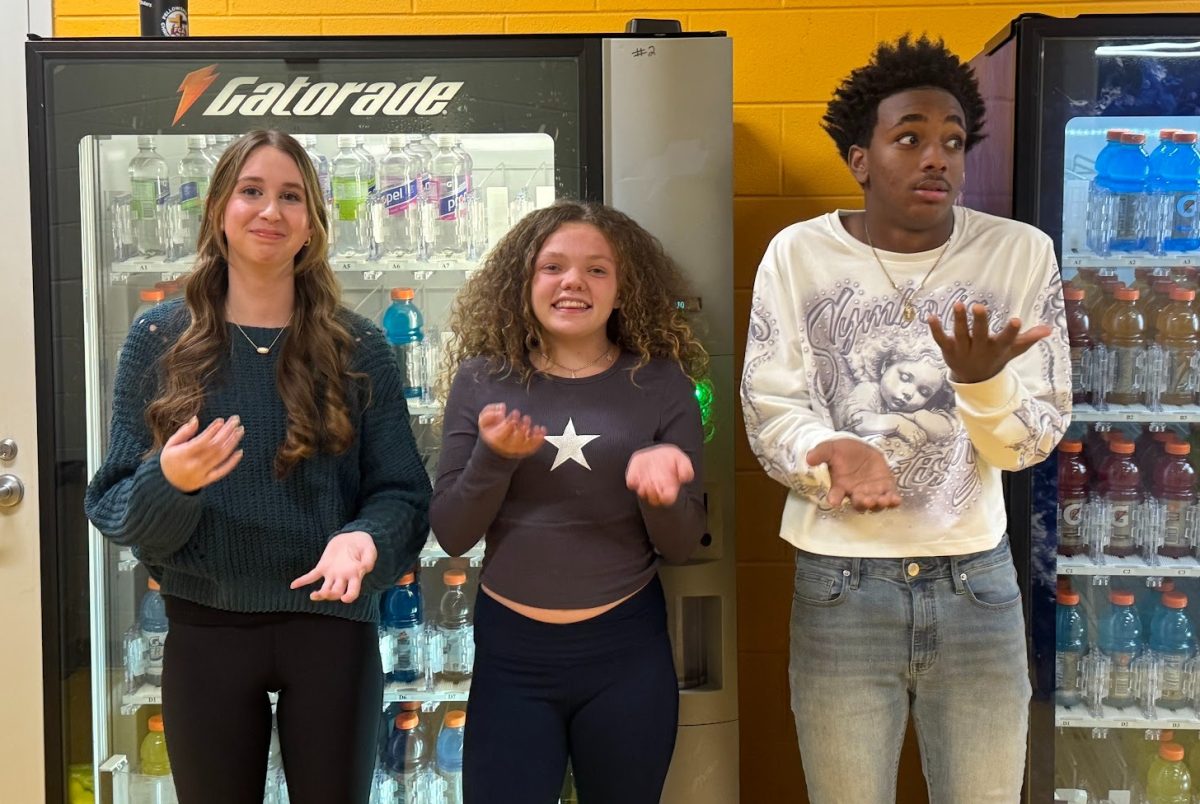
Ever wondered why you constantly keep hearing the term “six-seven” everywhere you go? This is just one of many popular slang terms now used–particularly among members of Gen-Z–that have spread through social media, text messaging, and other platforms. Such slang has not only shaped the way young people communicate, but also helps brands stay relatable and “on trend.” You might be wondering what these slang terms mean, or why they seem so widespread and repetitive now.
Slang is normally used by a specific group of people, a subculture, or even a region to communicate feelings, concepts, and ideas more quickly than through formal language. Slang terms easily spread throughout big platforms such as Instagram, TikTok, Discord, and X. These viral platforms are built for rapid content sharing and allow people around the world to connect and communicate with each other, allowing these terms to become widespread across all platforms. Although many might find them annoying, especially the use of the meme “six-seven” that’s been heavily used mainly in schools, it’s used as a form of expression, exaggeration, and overall, sarcastic humor.
Examples of currently popular slang terms are “Bet,” “It’s giving/not giving,” “six-seven,” “rizz,” “delulu,” “cook/they’re cooking,” “the ick,” “lowkey/highkey,” and countless others.
Here is a breakdown of the meaning of these terms:
- “Bet” means that they agree, or another word for “Okay.”
- “It’s giving” means that something either meets or exceeds expectations of something. For example, you would use it in a sentence such as “That outfit is giving.”
- “Six-seven” can be interpreted in a few different ways. It’s mainly a meaningless term and is used in a way that’s impossible to define. It’s ironic, and the fact that it makes no sense is what makes it so funny.
- “Rizz” is another term for charm, attractiveness, or someone’s ability to flirt. For example, you would say “That guy has rizz,” or in other words, “That guy has game.”
- “Delulu” is short for delusional.
- “Cook/they’re cooking” means they’re doing something really good.
- Getting “the ick” is another phrase for saying they did something that they didn’t like or rubbed them the wrong way, giving them the ick.
- “Lowkey” means suddenly, and “Highkey” means completely or intensely. It’s used to express your opinion on something. Example: “That test was lowkey easy,” or “That test was highkey hard.”
Slang changes constantly, and it’s always evolving. By the same time next year, these terms may all become more irrelevant, and new slang terms are sure to be made. Slang is keeping language alive, and it’s one thing that can bring people together to share a laugh and have a good time. It reflects values, and can even be used as a way to cope. Many people find that humor can help lighten a situation, so the irony and nonsensical terms can help with that.
Slang isn’t just something meaningless; it’s a playful language, allowing different kinds of people to connect through words and terms. Understanding slang is about the people behind the words and the different stories they tell. It expresses who we are and what we care about, allowing it to be fascinating to others, especially people who are older with little understanding. Educating others helps spread the word and keep new slang terms coming. It’s a form of creativity that keeps our language from going stale.





Nope • Dec 8, 2025 at 12:41 AM
I wish 6-7 could die faster it is the worse slang we have ever had
No • Dec 3, 2025 at 11:59 AM
WOW! I’ve learned so much thru this article. THANKS!!!